The potential design, structure, and delivery of a national network of living labs to achieve 'food-farming environment' balance
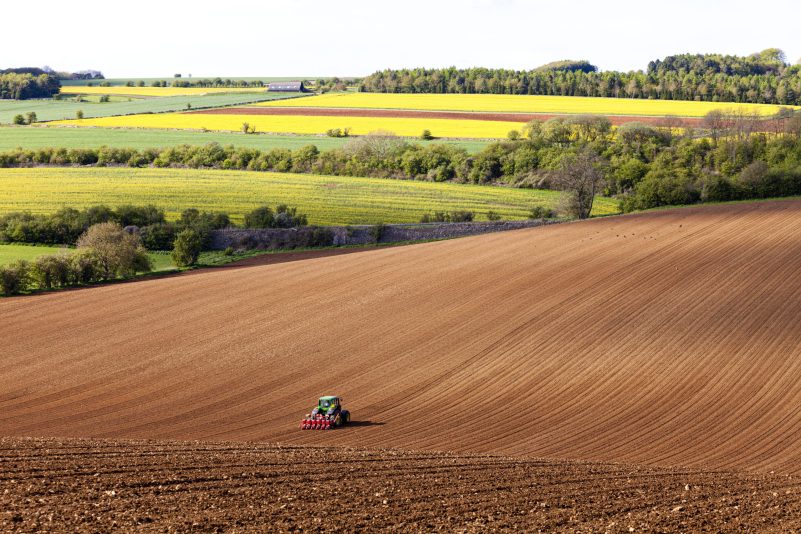
Over the past 80 years, agricultural intensification has played a central role in improving food security through mechanisation, breeding programmes, and increased use of fertilisers and pesticides, but it has also contributed significantly to soil degradation, biodiversity loss, greenhouse gas emissions, pollution, and climate vulnerability.
To meet future food demands while achieving goals such as net-zero emissions and biodiversity restoration, farming systems must become more sustainable, with farm-level change being a key part of this transition. Agroecological and regenerative farming practices are increasingly recognised as important solutions, but farmers, agribusinesses, and policymakers need better access to current scientific evidence and technology. In England, fragmented links between researchers, advisors, and farmers, along with a lack of coordinated advisory services, limit the adoption of sustainable practices and innovation. As a result, there is growing interest in approaches such as Living Labs, which help connect research and practice, address farmers’ evidence needs, and support the transition to more sustainable farming systems.
Defra and the devolved nations wanted to explore how a national network of Living Labs could support farmer-led research and knowledge exchange, coordinate on-farm trials and innovation, fill evidence gaps on sustainability outcomes, and develop consistent standards for data collection, sharing, monitoring, and evaluation. To inform this, the Land Use for Net Zero (LUNZ) Hub commissioned this project to map existing UK Living Lab capabilities and gather stakeholder views on how such a network could be designed and operated. The project used an online survey to identify current Living Lab activity across the UK and an in-person stakeholder workshop, followed by consultation, to explore options for the network’s design and delivery.
The key findings can be found in the full report here.

Pippa Chapman
Soil Scientist

Julia Martin-Ortega
Professor of Ecological Economics
Ruth Wade
Plant Ecologist

Cheng Wen
Ecological Economist
Read the full report
Subscribe to our Newsletter
A quarterly update of all LUNZ Hub activities, events and news stories.