Resonance : New Film
After almost 2 years in the making, the Resonance film is complete. You can watch it on the LUNZ Hub YouTube channel here.
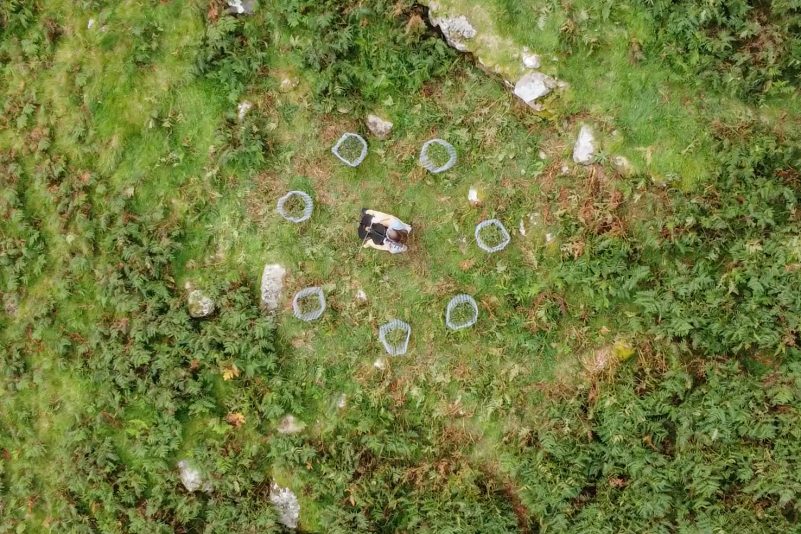
Resonance is a living 100-year artwork: seven circles of seven silver birch trees, located on seven lines radiating from the centre of the Lake District National Park. It is a convener for cross-community meetings, and a catalyst for conversations around land use and change.
One of our roles within the Hub has been to offer novel spaces for people to connect within and across specialisms, and we’ve been committed to bringing in nature and landscape. The Resonance project, featuring outdoor and hands-on events, is part of this.
Almost 200 people have so far been involved. First, the 49 birch trees for the circles were collected from a peat bog that is in the process restoration (read more about the Big Dig Day here. The seven small Resonance circles (each measures 3.5 metres in diameter) were then planted in new locations between 2024 and 2026. As far as we know, this is the first time trees have been replanted after being removed in a process of peatland restoration.
The Resonance film traces the creation of the living sculpture and weaves in reflections on land use and change. Produced by Rob Fraser and directed by Matt Sharman, with music by cellist Sarah Smout and poetry by Harriet Fraser, it also features contributions from farmers and land managers across the country. It is now on the LUNZ Hub YouTube channel here.
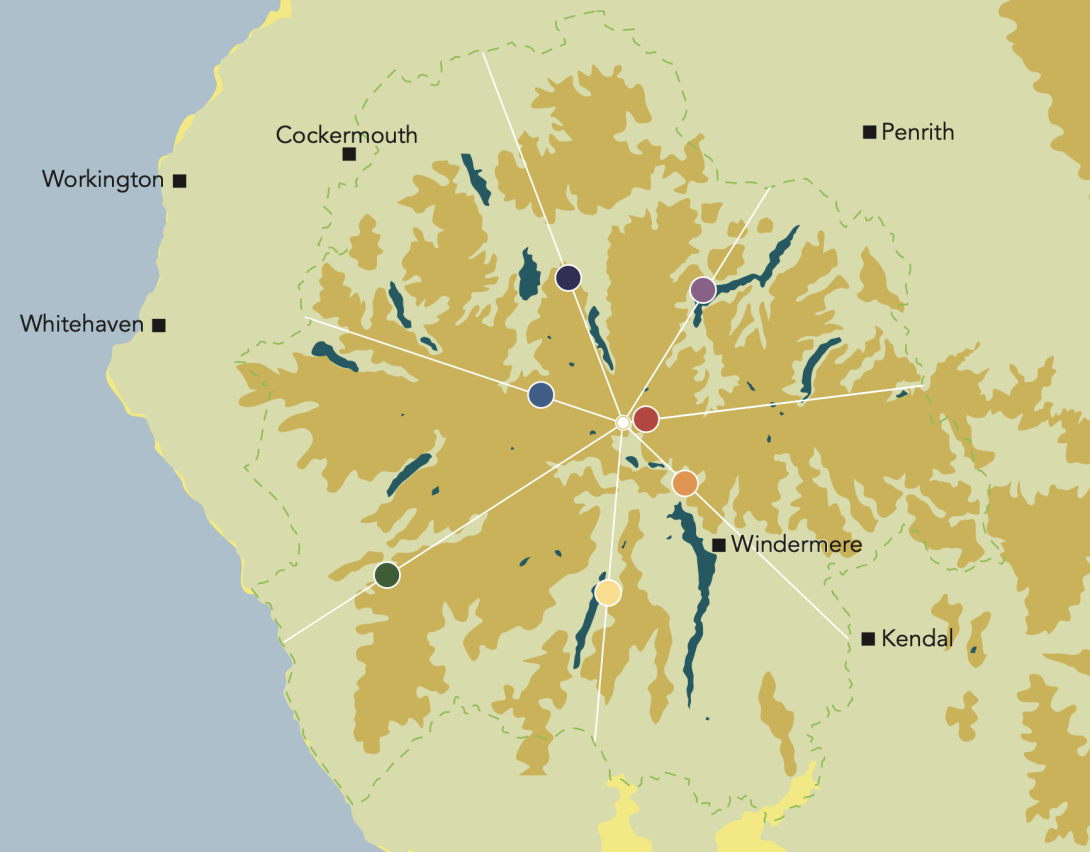
Map showing the location of the seven circles of trees: on seven lines, radiating at 51.42 degrees from the central point (a veteran Sycamore)
The task of collecting the trees and planting them out has been a collaborative, creative and fun process. At each location, people who are connected with that place have taken part alongside others who bring a regional or national perspective: the project has involved farmers, environmental NGO teams, university researchers, foresters, civil servants, ecologists, land owners, students and many others.
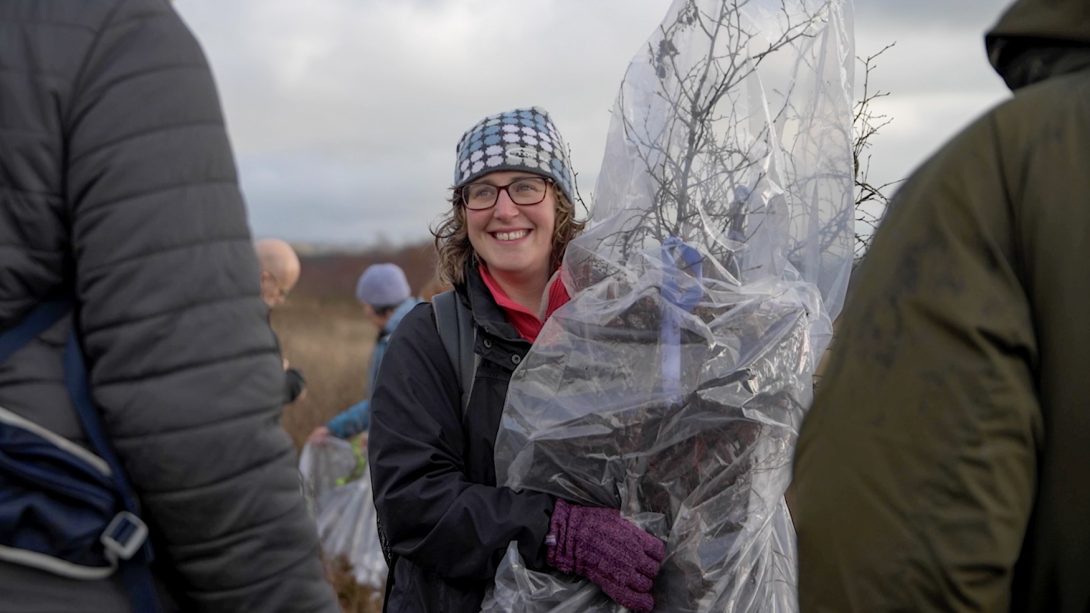
During the events, we’ve used creative prompts for reflection, and conversations have touched on local heritage, place-specific challenges and solutions, restoration projects, farming practice, climate, money, policies, community relationships, and more. The Resonance discussions have been rich, and new networks have formed. There has been plenty of laughter and very practical co-working, with time to pause, take in the experience … and eat cake (good food is an essential part of successful meetings!).
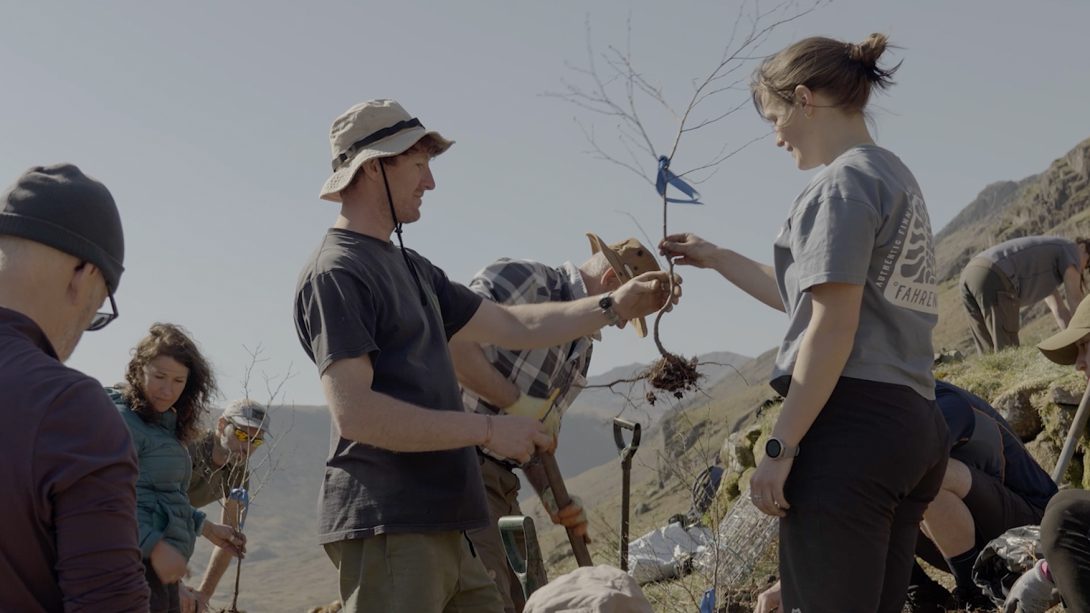
Resonance is an example of art at work: both as process and as a material thing. Its development has been inspired by the LUNZ Hub aims, consortium and work package discussions, and draws on interviews we’ve filmed for the LUNZ Hub, around the UK, as well as our previous work featuring trees, people and land. This project includes elements of socially engaged practice, participatory dialogue, ethnography, walking art, poetics and embodied practice, and applies a unique approach within the LUNZ Hub framework.
The seven circles in Cumbria are all doing well*. They are just the beginning: the constellation of tree circles is growing and we are working with support from the Woodland Trust to supply planting packs to groups of people wishing to plant their own circle …. so do get in touch if you’re curious. How might you use this approach to convene a space for gatherings and set up a long-term programme of caring for trees, and enjoying their growth, in your own community?
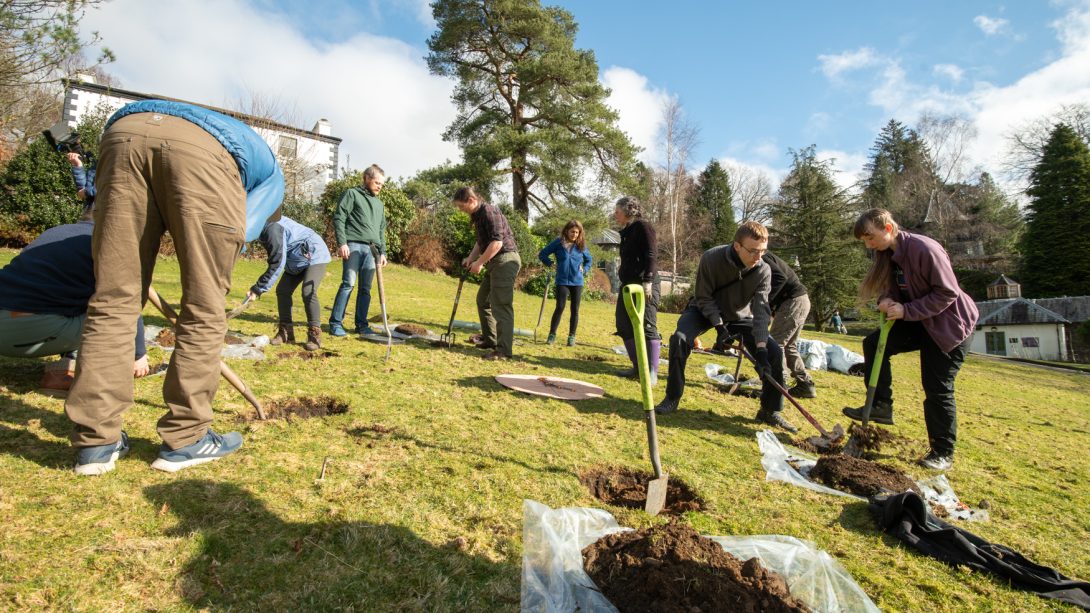
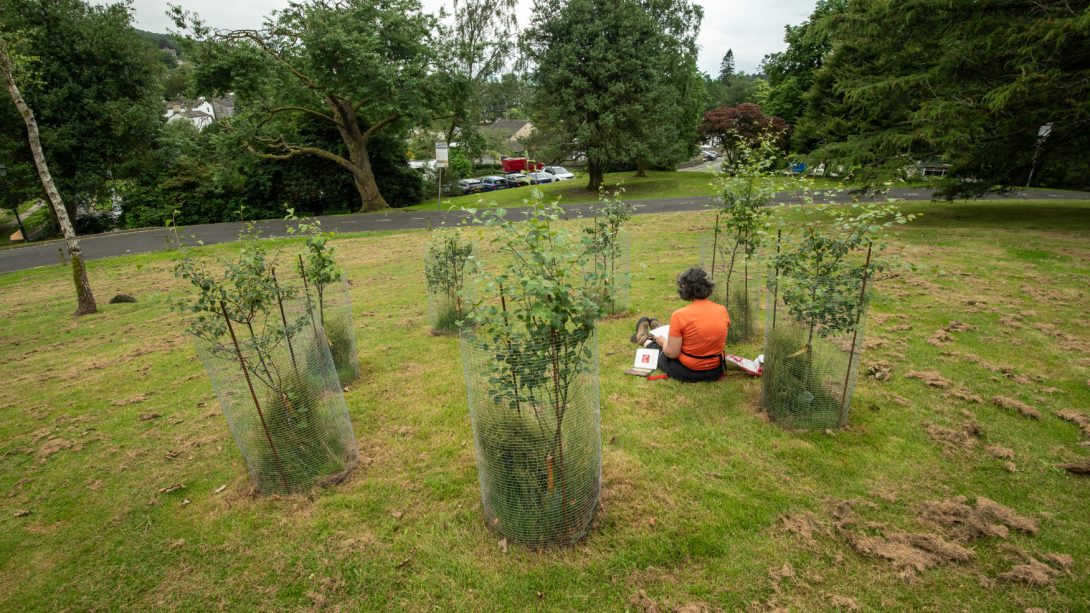
The Resonance film is one element of the wider project that has included a Big Tent event in Cumbria, in 2025. The film was premiered in June 2026, in an online film launch in partnership with the Royal Geographical Society, followed by a panel discussion with Georgie Barber (Land Use Lead, Food, Farming and Countryside Commission); Mike Innerdale (Regional Director, North of England, National Trust); Anita Lazurko (Senior Transdisciplinary Scientist, UK Centre for Ecology & Hydrology); and Harley Stoddart (Head of Climate Mitigation Science, Department for Environment, Food and Rural Affairs).
Some of the key takeaways from the panel, about what needs attention, in no particular order:
- building and maintaining trust
- changing exploitative/extractive attitudes
- seeing urban/rural as a continuum rather than a divide
- building effective governance structures to enable work across scales
- appreciating care as a core principle
- addressing unequal power dynamics
- democratising information
- building corridors for nature recovery
- planting a tree for each child born, continuously …
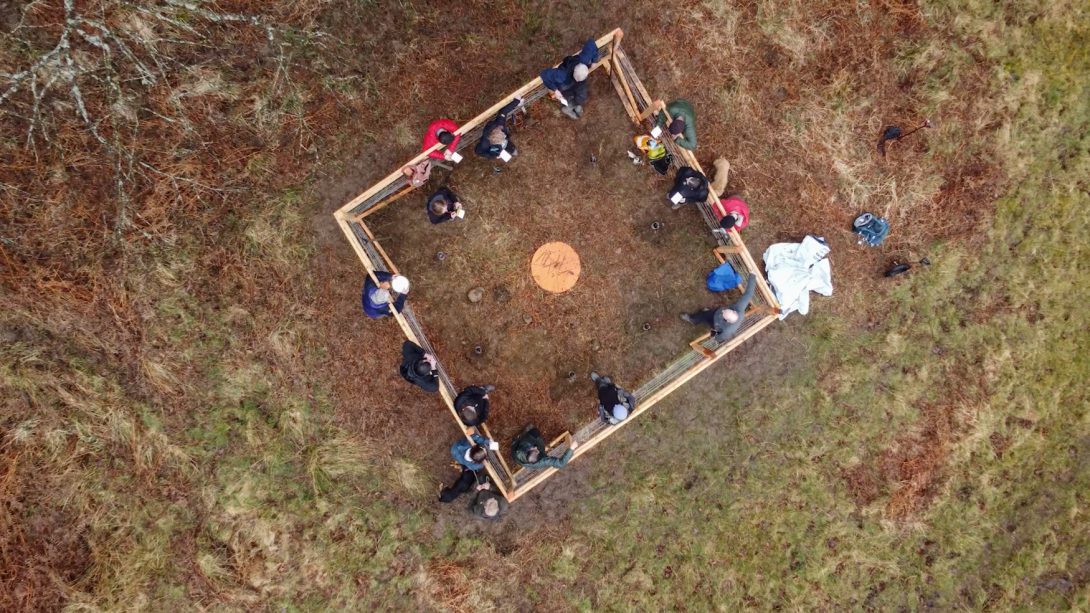
Resonance is a richly collaborative project and has been made possible thanks to many individuals and organisations who have given advice, scoped sites, granted permissions, helped to collect and plant trees, given presentations, built protective cages, and helped to make each event fun and memorable.
Our thanks go to Natural England, National Trust, Lake District National Park Authority, Forestry England, University of Cumbria, Centre for National Parks and Protected Areas, Friends of the Lake District, Muncaster Castle estate, and to all the farmers, commoners, and volunteers who have joined along the way. The creative outputs have been developed with filmmakers, illustrators and a musician from the PLACE Collective.
* We did a 10-day walk in early July this year to create a mapped link walk between the circles, which gave us a chance to check them all. With the exception of three trees that are looking a little stressed, all are doing well, flourishing even. This is despite the dry conditions this year (although we have been keeping an eye on them and have visited to water them once or twice in the first half of 2026).
In the ten days of walking, we covered just under 140km in what turned out to be really challenging weather. Blue skies every day, with barely any clouds, and very hot temperatures made some of the days really hard for us. And the landscape was showing signs of stress too, with bogs crispy dry and the fells yellowing.
It was notable that a lot of the livestock we encountered in the lower pastures were using whatever shade they could find; trees, hedges, walls, idle farm machinery. We welcomed the cool shade too, and took regular dips in lakes, tarns and becks just for some respite from the heat. This kind of weather is not normal for Cumbria, and we wouldn’t normally walk long distances in such heat, but it was enlightening.
As we walked, tracing paths we’ve covered several times in the last 20 years, we noted where interventions, such as tree planting, have altered the landscape, and where it seems to have resilience – or vulnerability – in a changing climate. It’s a good way to join up the dots and we’ll be sharing a blog about this walk soon.
Harriet Fraser
Art Interventions & Artist Placements
Rob Fraser
Art Interventions & Artist Placements
Subscribe to our Newsletter
A quarterly update of all LUNZ Hub activities, events and news stories.