The Land Use Framework – Multiple Choices for Multifunctionality
A Land Use Framework at last.
Years in the making the Land Use Framework (LUF) for England has finally been published. The previous Conservative Government first committed to publishing a LUF in the 2022 Government Food Strategy. This was delayed following multiple changes within the Conservative governments of Truss and Sunak before Steve Reed, the then Environment Secretary under the new Labour Government, announced plans to consult and publish a LUF at the start of 2025. At the time Henry Dimbleby, who first proposed a LUF in the National Food Strategy in 2021 (also known as the Dimbleby Review), described a LUF as:
“Done right the most important re-imagining of how we use our land since the Second World War.”
Playing to the strengths of the land
The LUF is intended to set out how best to reconcile the multiple competing users for our land. This includes for food production, nature, energy, infrastructure and housing. It will also ensure our land use helps make our homes, infrastructure and businesses more resilient to the impacts of climate change and store more carbon. The framework includes a vision for future land use in 2030 and 2050 and a set of principles to guide how land use decisions are made. It also sets out how the government will support land use change.
Any given parcel of land can provide a range of benefits, but these will vary in different places as our landscapes are diverse with considerable regional variation. As part of the consultation for the framework Defra ran regional workshops to help feed into ‘a national conversation’ on land use. The framework is intended to consider multiple demands and trade-offs bringing together spatial plans for different sectors. It acknowledges that:
“Different parts of England are better suited to different uses, change needs to happen in the right places to maximise benefits.”
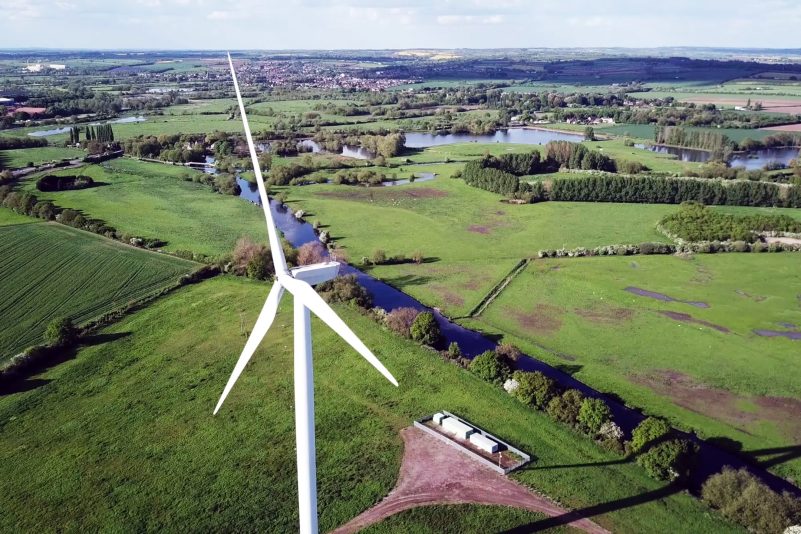
These issues are reflected in the principles within the framework – Multifunctionality, right use, right place, future-ready decisions and adaptive by design. The LUF also has implications for Net Zero targets, although not explicitly laid out in the framework itself. For example, prioritising the restoration of upland deep peat, which is found in relatively few upland areas. The framework also indicates that only 1% of land will need to be taken up by renewables including onshore wind and solar by 2050. Six percent of land will shift from an emphasis on agricultural production to a priority on nature and climate objectives, although some food production may still take place. Given the widely different potential of land for agricultural productivity, this need not have a big impact on national food supply, if the targeting is effective.
What does it mean in place?
The LUF has had a broadly positive response from a range of different stakeholders. What matters now is how the framework is implemented on the ground at a local level. Where these changes happen will be a key element for success and there will be trade-offs in what makes sense to do what where, for example, by avoiding land use change on the high yielding agricultural land that can continue to produce food sustainably. This will require the government to either regulate or incentivise changes appropriately. It will also require tools and accessible data to support decision making at different scales. One such tool is Agricultural Land Classification (ALC), identifying how well land can support agricultural production and consistent crop yields. A revised version of the ALC map will be published in the coming weeks. The LUNZ Hub England team will be exploring some of these issues over the coming year by developing a regional lens that can link the national policy ambition in the LUF with targeted local interventions.

Professor Jack Hannam
England

Professor Mike Morecroft
England
Subscribe to our Newsletter
A quarterly update of all LUNZ Hub activities, events and news stories.