
Soils and Flooding - expert panel explores the critical role of soil in mitigating flood risk
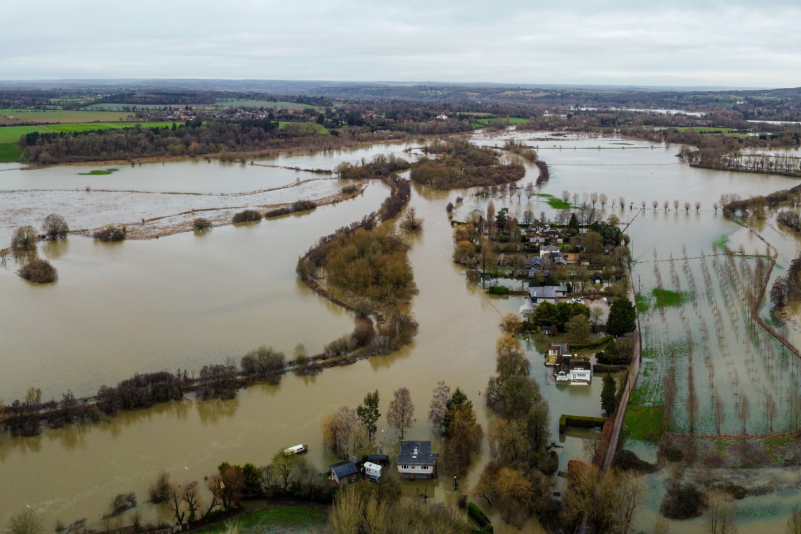
Soil is a critical part of the flooding story, with direct implications for land use planning, local communities, farming and nature’s resilience, and downstream agricultural pollution.
This workshop brought together leading practitioners and researchers working at the forefront of soil-related flooding events, mitigation and data. The experts drew on direct experience of flooding related to farming practice, cutting-edge research into the links between regenerative agriculture and landscape-scale flood resilience, and national datasets demonstrating the influences and limitations of soils on mitigating flood risk.
The discussion highlighted two distinct but interconnected approaches. One focused on acute flood events driven by localised, point-source soil structure degradation requiring targeted advice, protection and remediation. The other emphasised landscape-scale strategies that, over time, can potentially build broader catchment resilience.
The key takeaway was a shared recognition that soils are central to future flood risk management and information, but that effective strategies must operate at multiple scales, combining immediate, soil type-specific information, advice and interventions with longer-term, system-wide approaches.
In addition to targeted briefings for policy makers, farmers and designers of land use, we’ve collated 10 key takeaways from the workshop highlighting the critical role of soils in mitigating and managing flood risk.
1. Soils are critical for reducing and mitigating flood risk.
Climate change is driving more intense rain. Whether that becomes flooding depends largely on soil type, soil structure, and how land is managed.
2. Soil type determines soil’s capacity for water infiltration and storage.
Freely draining soil types can accept intense rainfall if the structure is good. Organic soils and soils with high clay content can naturally saturate and require vegetation aboveground to help store and slow the flow of water.
3. Compaction is a key driver of run-off.
Compaction impedes water infiltration, increasing erosion, runoff and muddy flooding. Often compaction is hidden in the subsoil, which can turn soils into runoff generators. Even thin layers of compaction (5mm thick) can strongly restrict water holding capacity and infiltration.
4. Flood risk is predictable, not random.
Highly erodible soils, vulnerable crops (potatoes, maize, winter cereals), slope, and farming practices such as poor timing of operations, trafficking on damp soils, late harvesting of crops, compacted seedbeds, outwintered stock, winter manure / slurry spreading, and poorly structured grassland interact to drive soil erosion. Land use is often not matched to land capability in high rainfall areas with steep slopes.
5. Many floods are avoidable — but poor practice persists.
Many UK farmers do not follow guidance. Post-maize advice is frequently ignored, and some farmers repeatedly plant high-risk crops on vulnerable slopes despite repeated erosion events. Additionally, countless farmers find themselves under huge economic pressure which, coupled with unfavourable weather drives a lot of the problems.
6. Remediating compaction delivers multiple farm benefits.
Remediating compaction and improving structure not only reduces runoff, erosion and nutrient loss but increases yields, workable days, and drought resilience. Research exploring different soil management techniques and susceptibility to runoff depend strongly on soil context e.g. choice of crops, subsoiling, tillage, the need for drainage, use of crop cover and stock management.
7. Regenerative systems work — but benefits take time to accrue.
Correct placement of measures (cover crops, buffer strips, minimum tillage etc.) can improve soil structure, organic matter and water storage, but benefits build over years, require collective and sustained management, and need monitoring. If soil context is ignored (soil type, condition, location), even best practice can be reversed. Similarly, building soil health takes a lot longer to realise than the potential degradation caused by an extreme climate event combined with poor practice.
8. Field connectivity is central to flooding dynamics.
Two thirds of eroding fields are connected to watercourses, making landscape pathways a decisive factor on downstream flooding. Ditches, drains, tracks, lanes and field layouts often turn runoff into floods by connecting eroding fields to rivers, carrying sediment and other pollutants along pathways to watercourses.
9. Land use must match land capability.
Soils on steep slopes or located in high-rainfall areas are inherently high risk for cropping; in these areas, wetlands, buffers and water-storage landscapes are often better than farming against nature.
10. Soil-based flood management is a systems issue.
The workshop converged on a systems view of flood mitigation: soil type sets baseline susceptibility, soil structure and compaction determine runoff generation, and connectivity dictates downstream impact.
Effective natural flood management therefore requires soil-specific, scale-appropriate interventions, sustained monitoring, and stronger alignment of farmer support, guidance, compliance, and policy.

Professor Pete Smith
Soil Health and Carbon Dynamics

Ellen Fay
Soil Health and Carbon Dynamics
Subscribe to our Newsletter
A quarterly update of all LUNZ Hub activities, events and news stories.