
Exploring the Fens: Day 1 of our 'Big Tent' event in Ely
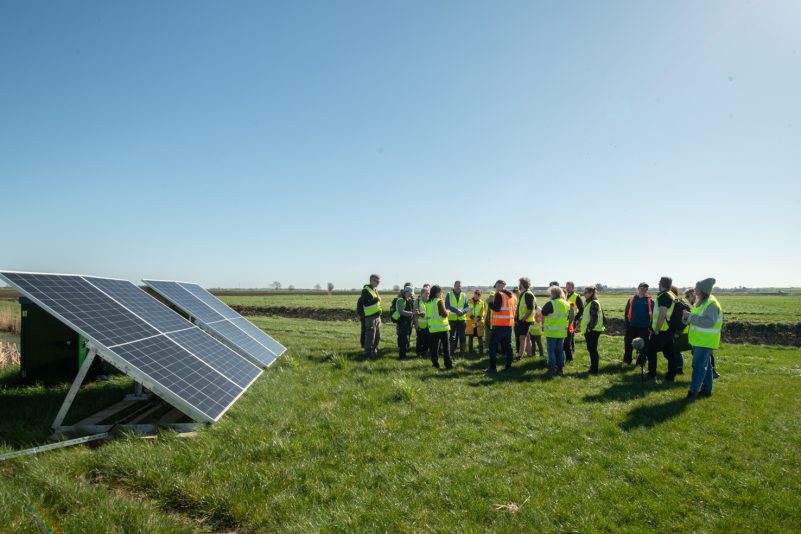
What’s going on in the Fens to meet the challenges posed by a changing climate and degradation of peat? The recent LUNZ Hub Big Tent event in Ely focused on these issues, and began with a day of field visits, which was definitely enhanced by warm sunshine.
The Fenlands of eastern England are one of the UK’s most productive agricultural regions, sometimes called Britain’s ‘breadbasket’, and producing around 35% of England’s vegetables. This region was once wet and swampy, but systematic drainage starting in the 17th century transformed marsh to productive agricultural land. This did increase food production but is not sustainable. As peat is worked for crops, it dries and aerates: the land is sinking, and the degraded peat is a potent emitter of greenhouse gases. Added to this, changing weather patterns including heavy rainfall and drought exacerbate challenges for farming, and there is an increasing flood risk as the climate changes. Declining biodiversity is also a significant issue, as it is across the UK.
With this pressing need for change, many farm businesses are changing practices, with regeneration in mind, and are working with local agencies to redress a complex system affecting hydrology across the fens.
The field trip brought people together in three different fenland contexts:
- small-scale trials of paludiculture with a goal of nature restoration and carbon sequestration;
- conservation and biodiversity focus in a National Nature Reserve;
- regenerative practices in large-scale food production.
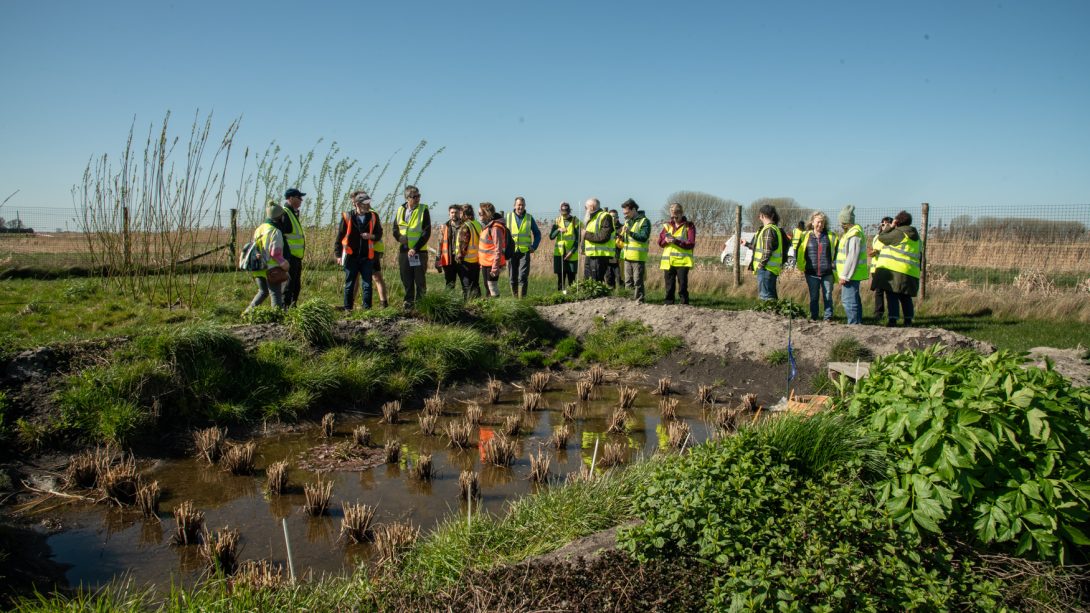
Trial beds at Oxwillow Farm (Photo credit: Rob Fraser)
We began at Oxwillow, a farm run by the Taylor family whose focus is on restoring wildlife habitats alongside traditional farming and trialling new approaches to ‘wet farming’ or paludiculture, where crops can be grown without draining the peat. We were taken around a part of the farm to learn about a number of trials, including rice growing and the harvesting of miscanthus grass for bioenergy. It was a deep dive, with plenty of questions. Find out more direct from Oxwillow.
“From what we've seen today, I think it sounds really promising that there is scope for farming in these difficult systems, and we can diversify crops, maybe plant things that haven't been historically planted in the UK, and actually get them to grow and make money from it.”Imogen Ryan, Forest Research
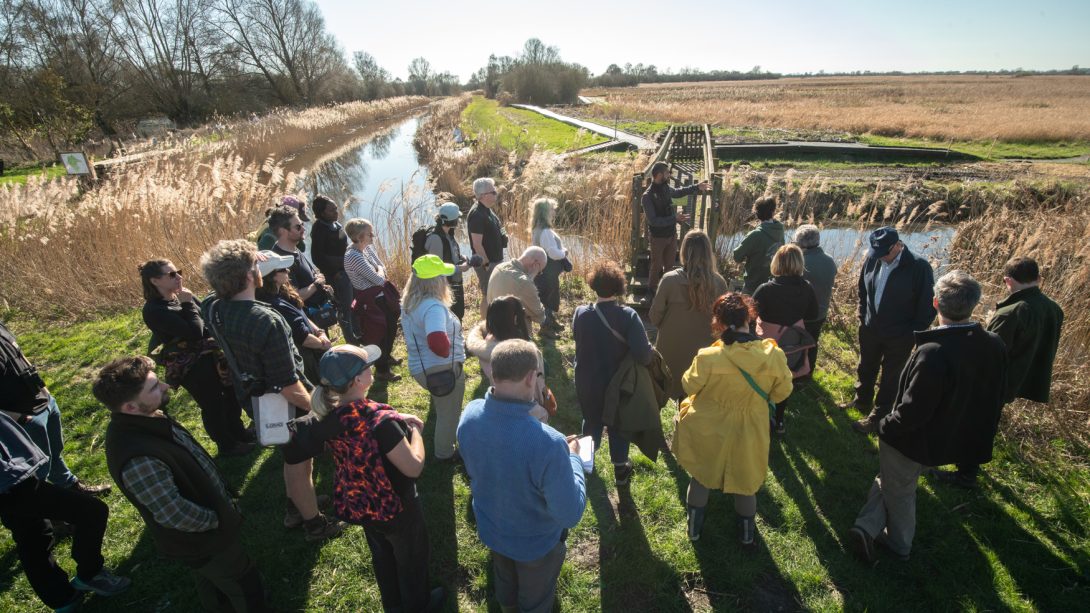
Wicken Fen visitor centre (Photo credit: Rob Fraser)
As a contrast to the farmed landscape, the next stop was Wicken Fen, the National Trust’s oldest nature reserve. Wicken Fen includes a section that has never been drained (only 0.1% of fenland has escaped drainage), so it has unique hydrology and vegetation. The rangers led a tour to show off some of the site’s special features, explaining the processes of care in place, including the herd of free-roaming Highland cattle and Konik ponies who are an integral part of conservation.
As we looked over the flat lands, we were joined by flocks of birds: this is a very popular site for bird watchers. Plenty of time on this visit to explore some of the bigger questions about land use decisions, finding a balance between nature restoration and food production, and appreciating what can be learnt from past practices – both where land has not been drained, and where it has been significantly altered. (Website here).
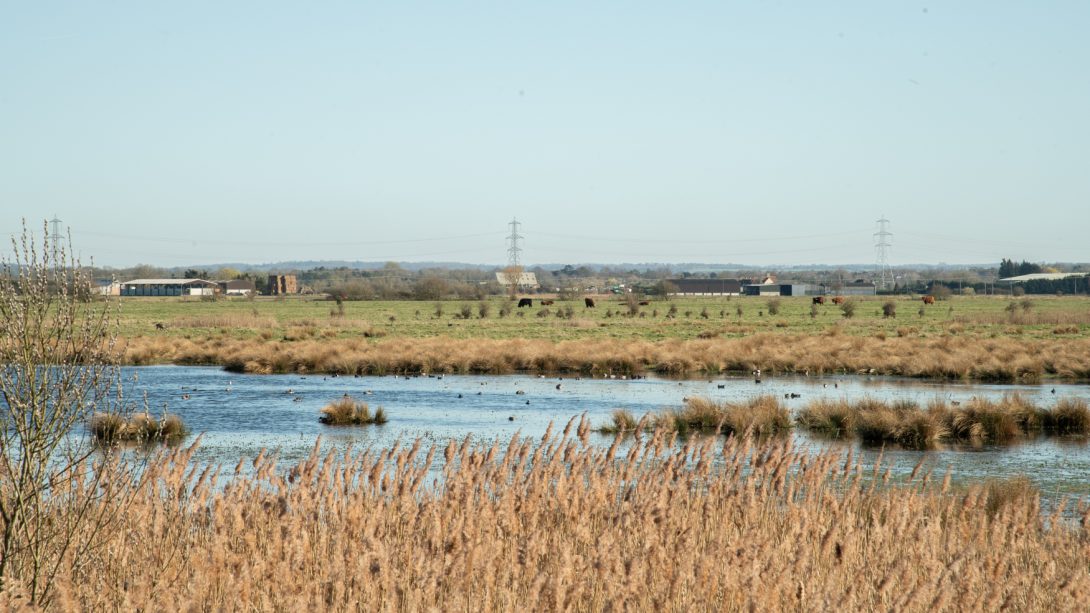
View across Wicken Fen (Photo credit: Rob Fraser)
“A lot of my work is sat behind a desk, and I do a lot of modelling, looking at how polluted culture or wetland may impact landscapes, but nothing beats coming out and seeing it for yourself, you know, seeing a farm and then seeing what can be restored or how different farming practices can be implemented.”Joshua Copping, RSPB Conservation Scientist
The final visit brought us firmly back into the present, and to large-scale production. G’s has growers across Suffolk and Norfolk (including here at Engine Farm) and in Europe, and produces vast quantities of salad and vegetables. But for them the emphasis is not solely on production: their attention is on regenerative practices.
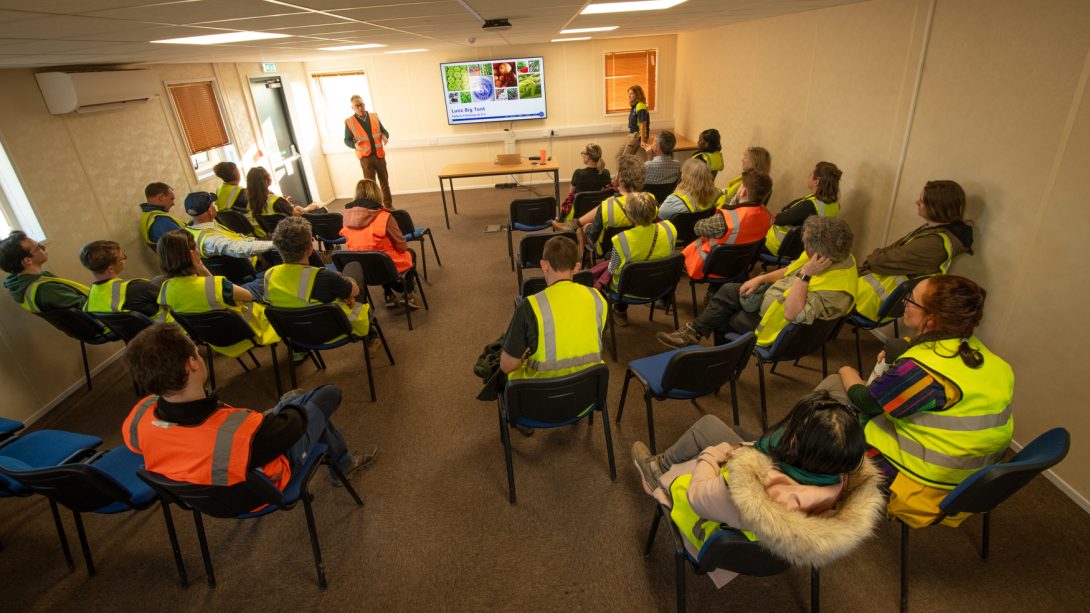
Presentation at Engine Farm, part of the G’s Growers group (Photo credit: Rob Fraser)
Julius Joel and Lucy Harker outlined the importance of a regenerative approach to ensure a healthy landscape and continuing food production and explained their journey to make the business increasingly sustainable.
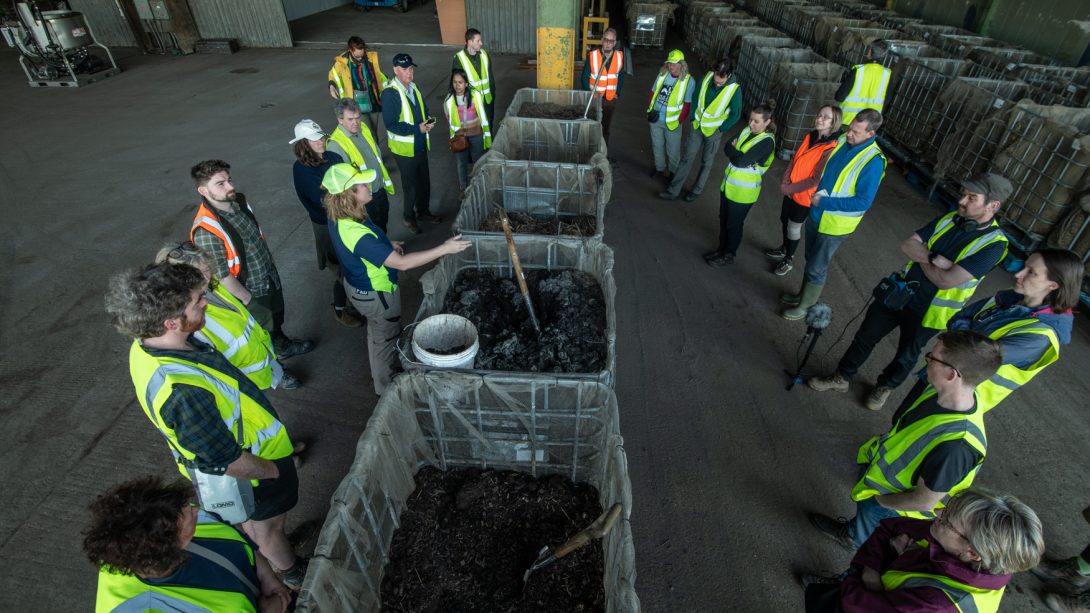
Johnson-Su method of composting in action at Engine Farm (Photo credit: Rob Fraser)
Changes in planting and cropping methods, and the introduction of the Johnson-Su composting system have allowed them to reduce fossil fuel and fertiliser inputs and witness an improvement in the condition of their produce. We were taken into the sheds to see the composting process, which is replicable in most locations; and out onto the fields to see the results of different practices.
“ A key takeaway for me from the day is that farmers and researchers need to work together instead of researchers doing work on their own and then coming to implement, instead of engaging with the farmers.”Fiona Imali, PhD student at the University of Leicester
In between visits the bus was loud with chatter as people discussed what they’d seen, and the tangible experiences from the field visits were carried into Day 2 of the Ely Big Tent Event.
The quotes above come from selected interviews carried out by Harriet Fraser and Rob Fraser, whose short film can be viewed on the LUNZ Hub YouTube channel here.
Subscribe to our Newsletter
A quarterly update of all LUNZ Hub activities, events and news stories.