Creative Collaborative Placements project - Research Institutes Chosen Subjects of Enquiry
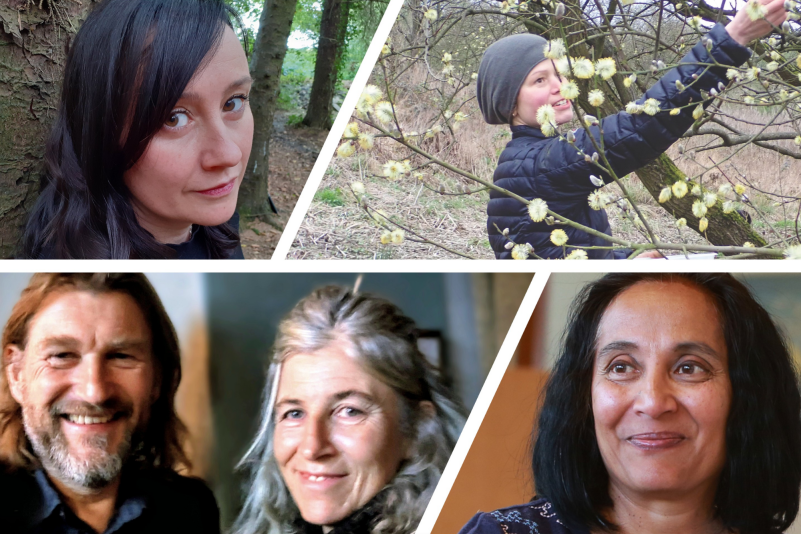
In the summer, the PLACE Collective put out a call for Creative Collaborative Placements with the LUNZ Hub, across the UK. There was a huge response and an extremely high calibre of applications – wow, there are so many brilliant artists out there – but after a long and thoughtful selection and interview process decisions were made.
We are delighted to announce the three new placements in Scotland, Wales and Northern Ireland, and the ongoing work in England.
NORTHERN IRELAND
research lead – Elizabeth Macgowan – AFBI
artist – Kate Arthur
Livestock, Land and Livelihoods
Livestock production is at the core of Northern Ireland’s land use sector and its economy; ongoing research and developments in practice play a key role in supporting viable farming businesses, and nature-rich ecosystems. This placement is an opportunity for an artist to enquire into practice and adaptation of livestock farm systems in Northern Ireland, for example hedgerows alongside grassland, agroforestry, increasing tree cover, or transitioning to mixed farming.
The artist will begin by meeting specialists at the Agrifood and Biosciences Institute (AFBI) in Belfast to define the direction focus of research and identify sites for fieldwork. AFBI is a leading provider of scientific research and services to government, non-governmental organisations and commercial organisations. Its areas of focus include sustainable agriculture, environmental protection and grassland and plant science.
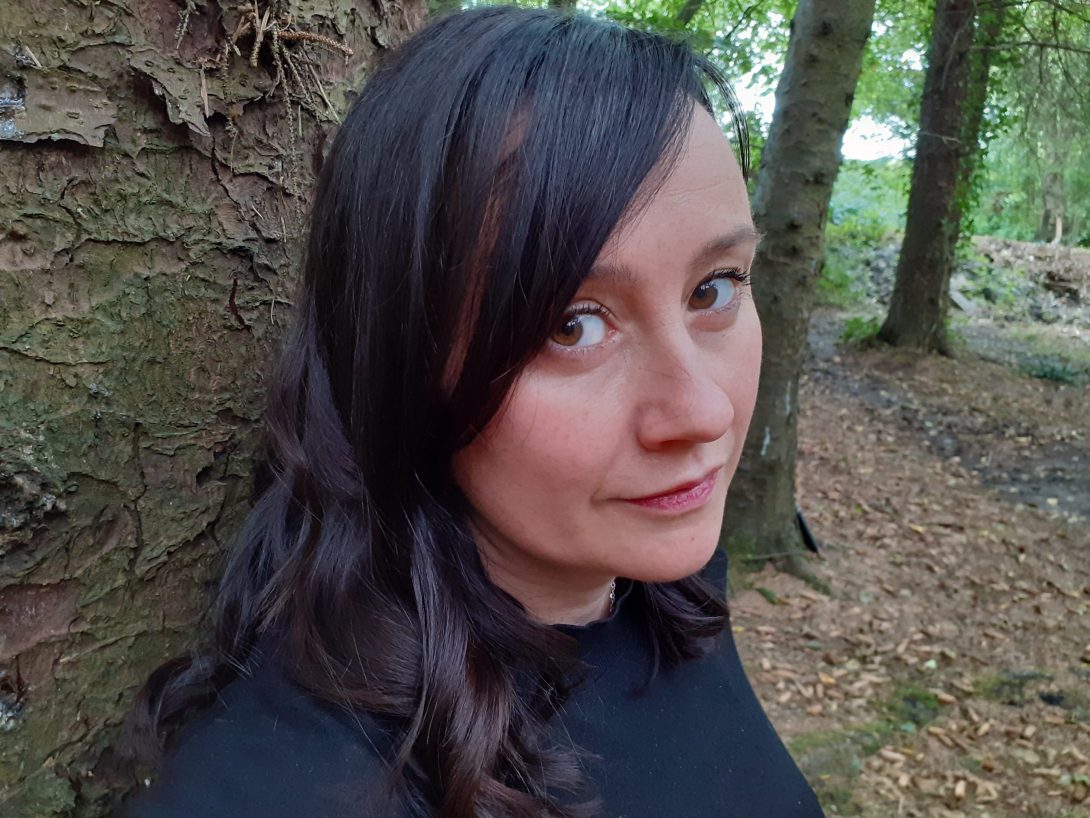
Kate Caoimhe Arthur lives in Co. Down. She spent some years in the Cambridgeshire Fens, where she was once Fenland Poet Laureate. She worked in collaboration with the fine art printmaker Iona Howard which involved a lot of walking in the Fens with Meg the dog. She has won the Fenland Poet Laureate competition and the Spelt competition. She has been published in The Tangerine, The Stinging Fly and Blackbox Manifold. She is working on her first collection.
Find out more through Kate’s website here.
SCOTLAND
research lead – Lee-Ann Sutherland – James Hutton Institute
artist – Becky Little + Tom Morton
The earth beneath our feet: understanding, regenerating and connecting
This placement is an invitation to delve into the realm of soil: how we understand soil health, approaches to building healthy soils, and forging a deeper and stronger sense of our connection to soil. The artist will be introduced to specialists at the James Hutton Institute which hosts the National Soil Archive for Scotland and has a team of researchers with special interests in soil, peat and agroecology. The James Hutton Institute is also home to the International Land Use Study Centre (ILUSC) and has an ‘Immersive Nature-Based Solutions Space’, offering a suite of visualisation tools – a flagship immersive space where models, videos and other imagery can be projected onto four walls. The artist may choose to bring this into their research and the presentation of their work.
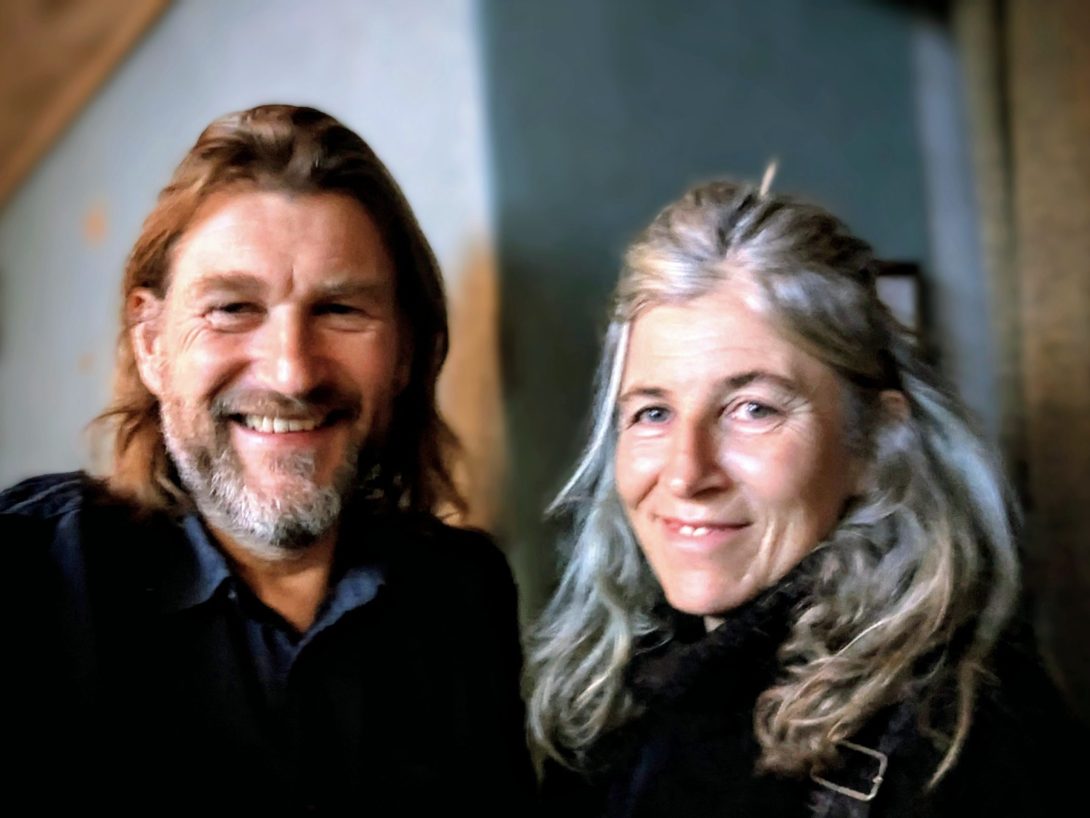
Becky and Tom’s collaboration as artist-builder and architect is grounded in decades of working with earth – in construction, heritage, research, and art. Through this, their practice has become one of listening: to the voices of land, water, and soil, and to the relationships that bind them to human making.
Becky and Tom work where materials, places, and people meet – exploring how earth is shaped by culture and at the same time shapes it. Whether through building, sculpture, or collective enquiry, they seek ways of attending to living matter as collaborator and teacher. Their projects bring together creative, architectural, and scientific perspectives to question extractive systems and reimagine more reciprocal ways of working with the ground beneath us. Rooted in ideas of assemblage and Rights of Nature, their practice aims to give soil and more-than-human beings a place in the conversation about our shared future.
To find out more, visit the websites: Becky Little (Rebearth) and Tom Morton (Arc Architects).
WALES
research lead – Alan Radbourne – UKCEH
artist – Jacqui Symons
Wales Focus: Patchwork – connecting the smaller scale to the bigger national ambition.
Many farmers and land managers are making changes with demonstrable benefits to biodiversity, soil function, carbon sequestration and business success. These changes are occurring at small scales, with mostly local impacts. One of the challenges in Wales (and the other UK nations) is how to replicate or scale up change. This placement invites an artist to enquire into this issue, beginning by meeting specialists at the UK Centre for Ecology and Hydrology in Bangor. UKCEH is a leading research centre, with specialists across the environmental sciences. Its key programmes include ERAMMP – the Environmental and Rural Affairs Modelling and Monitoring Programme – which is developing insights into sustainable landscape management in Wales. Evidence from ERAMMP is used by Welsh Government, who need robust information to advance policies for social, economic and environmental resilience. It is a complex picture, however, with a core challenge that invites an artist’s perspective, drawing on existing research and stories: how might initiatives and landscapes be better connected, to create national transformation?
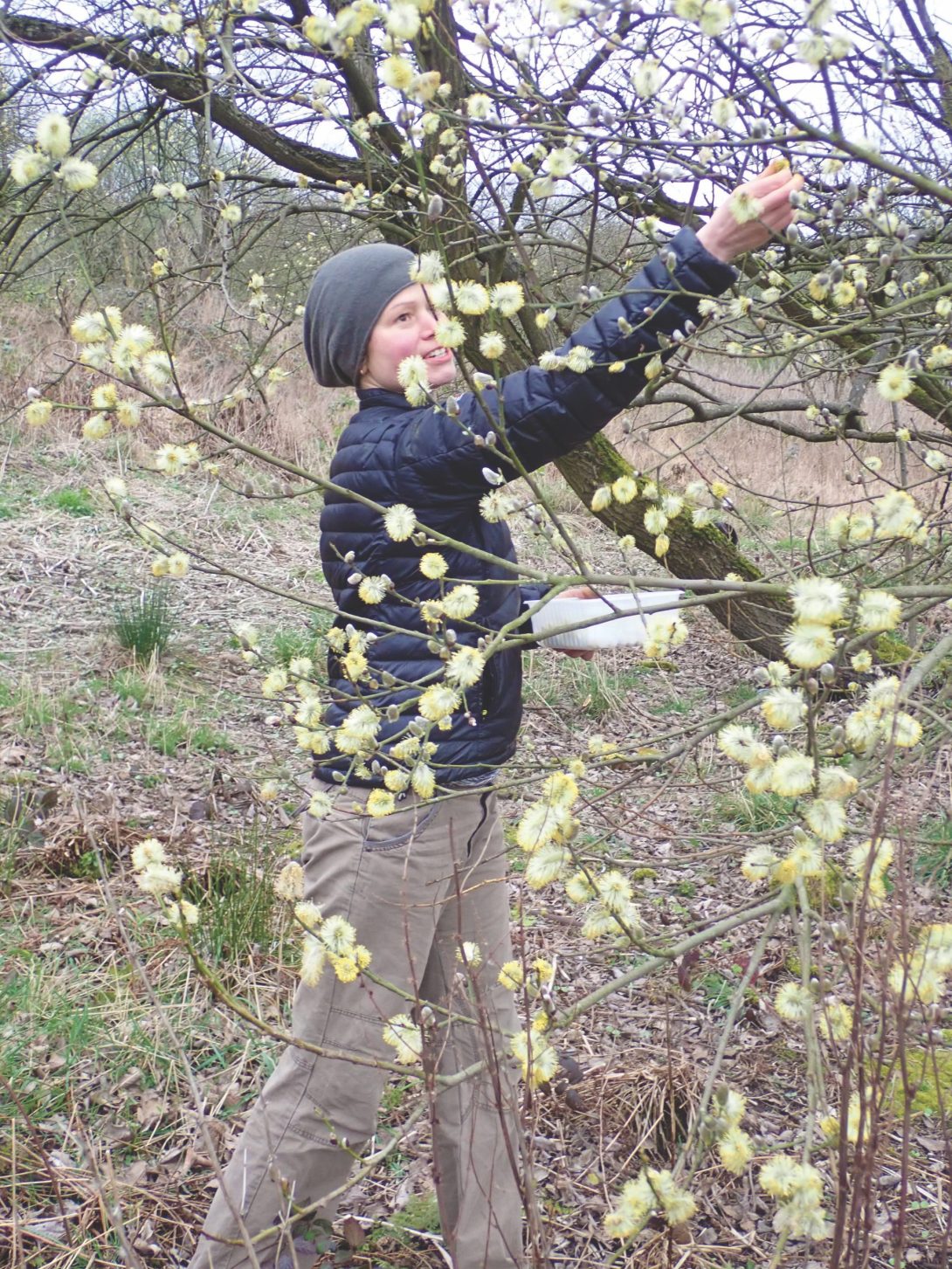
Jacqui Symons is an artist printmaker who responds to the environment and our natural world, with a focus on detail and intimacy. Jacqui’s work explores concerns about climate change, the loss of nature and biodiversity, attempting to balance an appreciation for Earth’s beauty with a more serious message of irreversible damage. Jacqui’s work concentrates on asking audiences to notice natural miracles, to appreciate the often unseen or small spectacle and rediscover the wonder of nature.
Time spent working on a piece is very important to Jacqui, both in the meaning of the final piece and as a personal process; often involving laborious and time-consuming methods. This is seen in her work, producing her own art materials from the natural world – growing plants, processing them into pigments, grinding and mulling them into ink, before even starting a print, adds meaning and further connection.
Find out more through Jacqui Symons’ website.
ENGLAND
research lead – Adrian Collins – Rothamsted Research
artist – Daksha Patel
Supporting agroecosystem transitions in the context of a changing world
Agroecosystems are now facing a multitude of abiotic (climate) and biotic stresses, either singular, or compound, meaning that land use and management transitions to deliver policy priorities including resilient production, clean water and air, as well as restoring and protecting biodiversity, need to be supported by robust data and evidence, as well as knowledge curation, taking account of co-benefits and trade-offs.
Against this context, Rothamsted Research has been investigating the key challenges facing farmers and land managers for over 180 years, making use of world leading, strategic and long-term, platforms, facilities and industry partnerships and networks. Here, examples include the world’s most instrumented farm platform and supporting research infrastructure at the Rothamsted North Wyke campus in Devon, southwest UK.
The artist in residence will link up with a number of scientists working on various aspects of our farming system science for both livestock and arable enterprises, and will be based at our North Wyke campus near Okehampton in Devon, UK, which houses some of our National Bioscience Research Infrastructure.
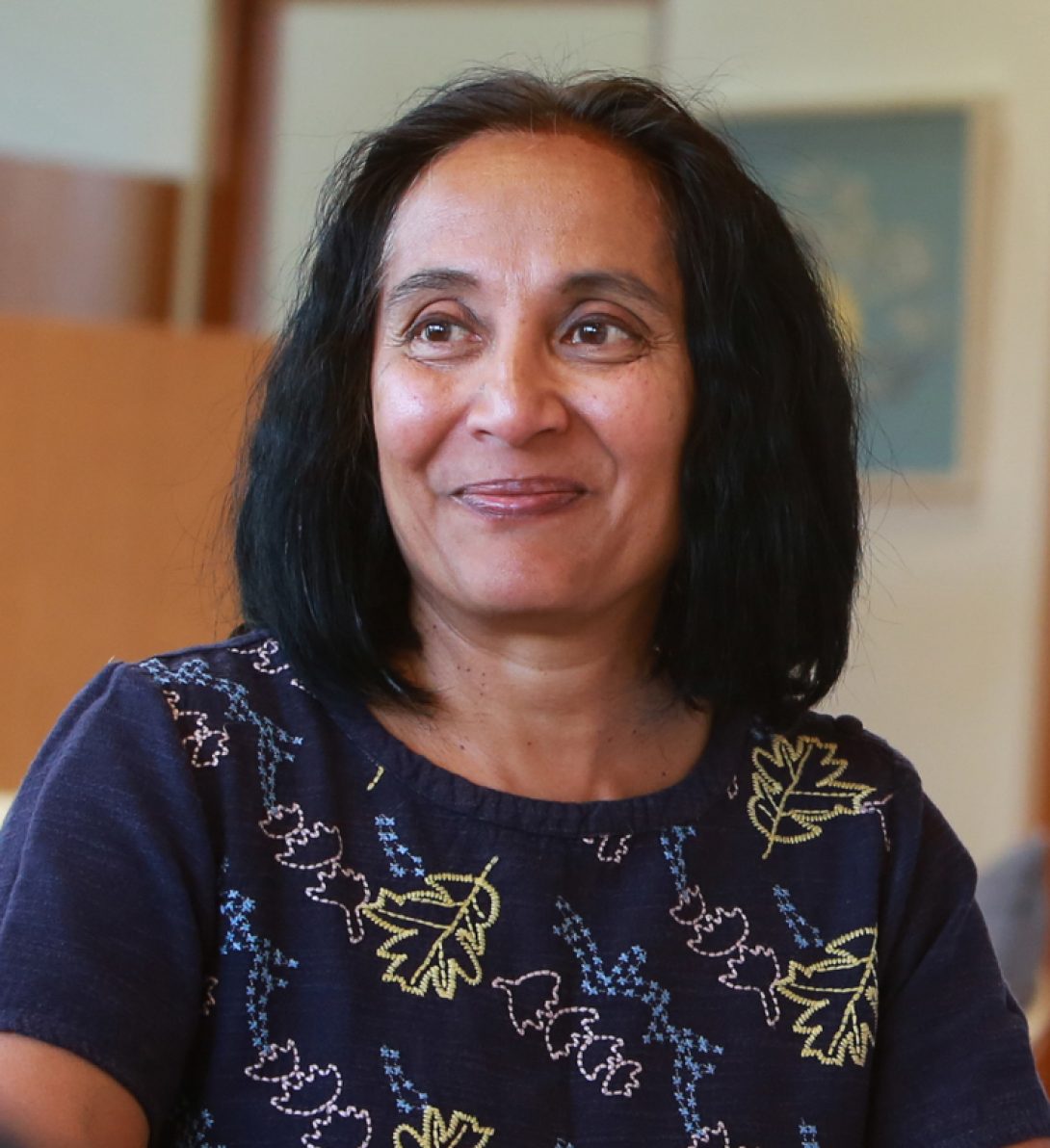
Daksha Patel is a multi-disciplinary artist who works across a wide range of media, materials and technologies. Her inter-disciplinary practice has engaged with Biophysics, Biomedicine, Applied Mathematics, Environmental Modelling & Justice, Linguistics and Neuroscience. Daksha works regularly with science institutions, including work with Imperial College, London (2024); The Biophysical Science Institute, Durham (2024), University of Exeter (2023) and King’s College, London (2022). Her ongoing interest in processes of mapping, measurement and visualisation has led her to explore technologies such as Lidar scanning, photogrammetry, GIS (geographical information systems), bio-sensors and creative coding. Daksha particularly enjoys being immersed in long-term residencies, where her process can typically involve delivering trans-disciplinary workshops, presenting at conferences, writing papers, as well as creating artworks that engage with the materials, methods and research of the host institution.
Find out more through Daksha’s member profile on the PLACE Collective here. And Daksha’s website can be found here.
The Creative Collaborative Placements programme brings artists together with specialists from the LUNZ (Land Use for Net Zero, Nature and People) Hub.
The programme gives a framework for artists to be in dialogue with specialists from research, practice and policy, and to develop work in response to a specified topic in the context of land use and change. The work will be responsive to a process of collaboration, knowledge exchange, fieldwork and discussion.
Subscribe to our Newsletter
A quarterly update of all LUNZ Hub activities, events and news stories.